Birding the Amazon at Palmari Nature Reserve

Visiting the Amazon is a bucket list travel destination for many. But it’s such a huge place, that it can be hard to choose what area to visit. Palmari Nature Reserve is in Brazil, but typically accessed from Leticia, Colombia.
It was affordable for me to get to (international flight to Bogota) and it’s accommodation price is reasonable. There are many activities to choose from at Palmari Nature Reserve and you’re assigned your own personal guide for the duration of your stay. Read on for tips on how to get there, what to do, and if I thought it was worth it.
How to get to Palmari Nature Reserve
The easiest way to get to Palmari Nature Reserve is by starting in Colombia. From Bogota, you can take a two-hour direct flight to Leticia. Keep an eye on flights–they’re usually around $150 USD, but they frequently drop in half for a round-trip flight of $60-70. Or if you’re into points, I transferred points from my Bilt account to Alaska Airlines which I could use to book the domestic flight for only a couple thousand points (Alaska is partners with Latam).
A cab from the airport into the city is about $3 and takes around 15 minutes.
If you’re in Brazil, it looks like you would first have to get to Manaus and then take a flight to Tabatinga. Or you could take a boat from Manaus which takes 4-5 days. I met someone who was leaving that way.
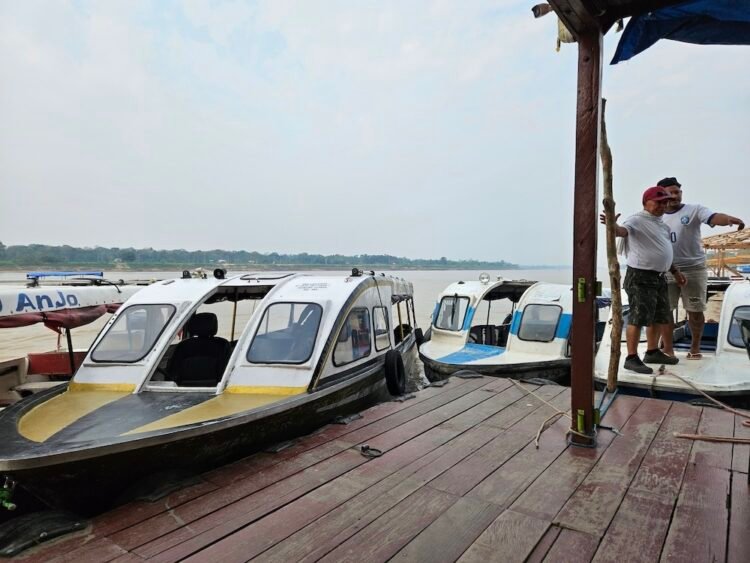
As far as getting to the lodge itself, Palmari arranges your transportation and it is included in your price (we’ll get to costs in a minute). I visited at the end of the dry season, so instead of going all by boat I was driven to Tabatinga, Brazil (~15 minutes) and took a public water taxi for about an hour. At the town, a car was waiting and drove us for another hour. Finally we took the lodge’s boat for the last hour or so to Palmari. In all it took about 4 hours.

When to visit Palmari
There are two main seasons in this region: wet and dry. The rainy season is approximately from January to March and the dry season is June to September, with transition periods in between. During the dry season, you can expect more hiking opportunities as the Varzea forest type will be walkable. In the rainy season, getting around may be more boat-based.
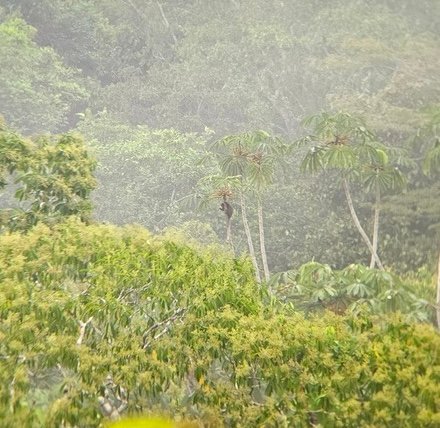
Palmari is unique as it has some of the only Terra Firme (never floods) forest in the area. This type of forest has less bugs and insects than Varzea (which floods seasonally)–at least that’s what they tell you!
I visited in August and it was very dry and unseasonably cool (upper 70s and low 80s my first couple days which I was so thankful for!). Initially, I thought it would be very cool to come back during the wet season to compare, but I was covered in bug bites by the end of my stay there and don’t think I could handle the buggy-er season.
What to do at Palmari
The lodge offers so many activities and you are assigned your own guide for the duration of the stay. You can do at least 2 activities a day, one after 7:30 breakfast and another after noon lunch. There are also options to pack a lunch if you choose a longer excursion, and you can even do overnight trips into the jungle. The lodge sends you the activity information ahead of time.
Activities I Did
Harpy Eagle Nest
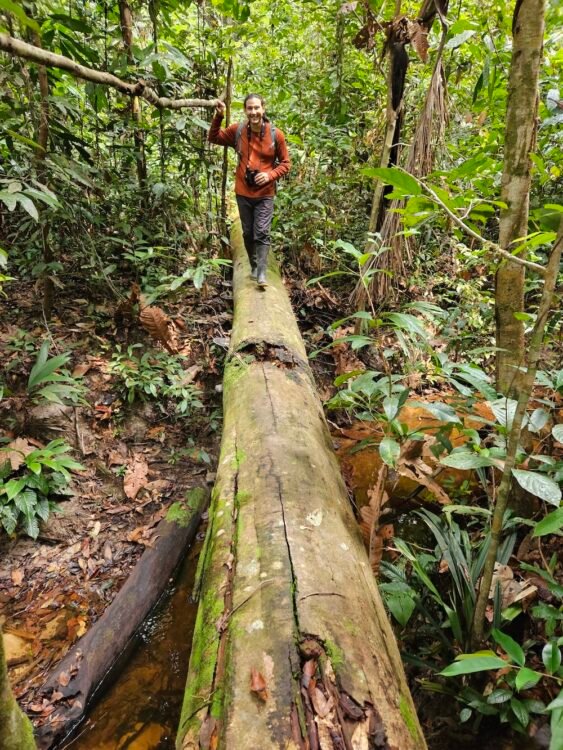
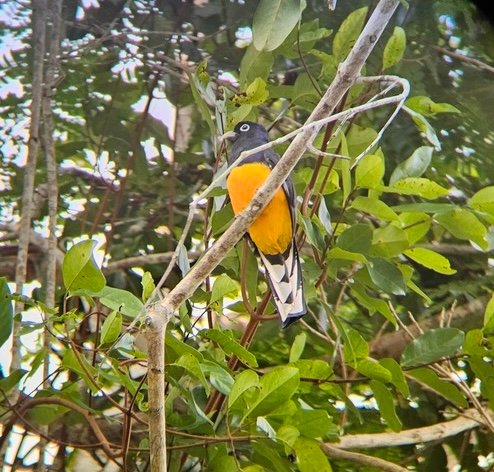
The hike to the Harpy Eagle nest is a couple miles roundtrip. I did not see the eagle (hasn’t been spotted in quite some time), but I did see the Pavonine Quetzal on the way there! This hike took around 3-4 hours. We were walking pretty slowly and stopping a lot for birds. It wasn’t too difficult and is mostly flat, though there are some portions you have to balance across fallen logs.
Kayaking
I kayaked in the river in front of the reserve. I saw both the pink and grey river dolphins and of course many shorebirds. It was okay, kind of messy and I got black fly bites on my stomach. I recommend you still wear long sleeves and pants. Once on the water, the bugs are not bad though which was nice.
Sport Fishing
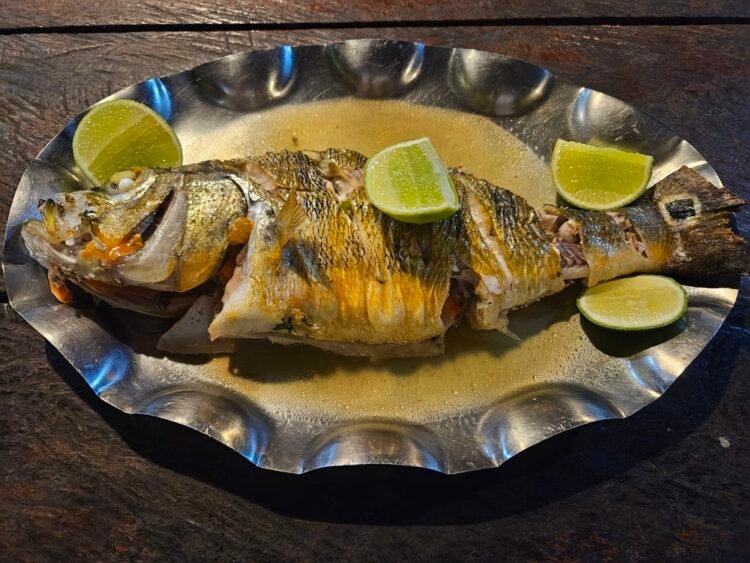
To fish, you take a boat for about 30 minutes and then hike for about 15 minutes to an oxbow. Being out in the kayak was pretty warm as the day progressed (definitely do this as a morning activity). The guide caught two peacock bass which we ate for dinner and I saw a trogon!
Boat Trip to the Ceiba Tree
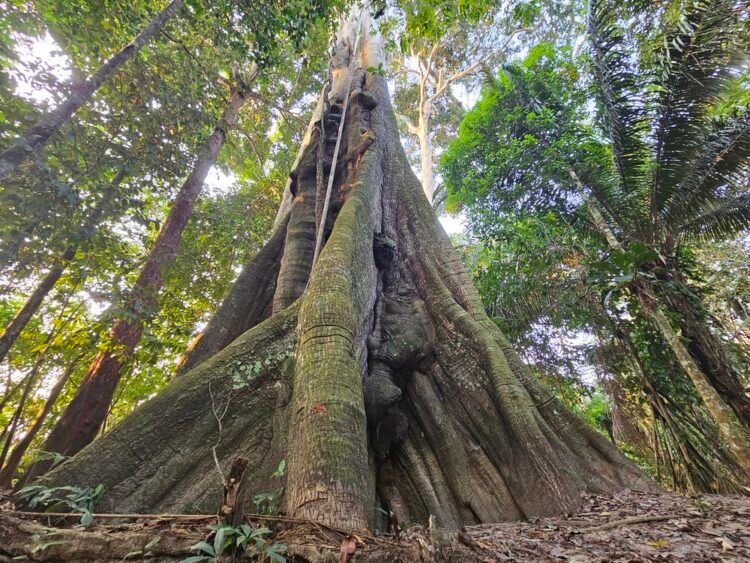
About 45 minutes upriver on the Peruvian side, is a very old Ceiba/Kapok tree. It was very cool to see up close and I saw a Lance-tailed manakin here!
Nighttime Caiman Searching
I was a bit torn about participating in this activity as it seems to be pretty invasive. This is a tour at night which consists of shining a light to search for the eye shine of the caimans. Once located, they attempt to pluck it out of the water so the guests can see it (they’re usually small). Fortunately for my conscience, none were found the evening I went.
Piranha Fishing
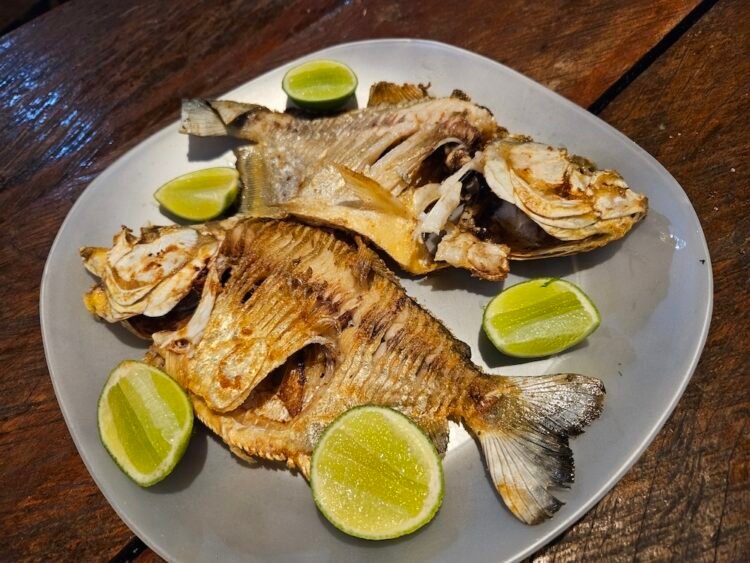
This was a fun little trip! I felt special since I was the only one who caught a catfish instead of a piranha.

Birding Platform
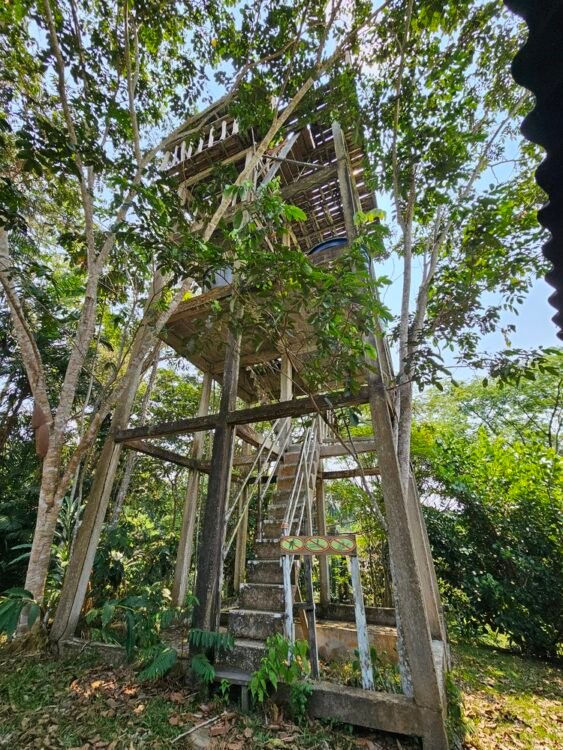
Obviously I was birding the entire time, but I started each morning up at the birding platform. This is a tower that is probably about 40 feet up in the air and gives a view of the river and the forest. I saw many birds from up there, of course, but also a monkey!
Bioluminescent Nightwalk
This was a short hike after dinner into the forest. We saw some leaves that glowed and a worm. No scary animals were seen other than a small tarantula. I also saw a Rufous Potoo on this walk! I have wanted to see a potoo for quite a while so was very excited when the guide said there is one that tends to hang out nearby.
Hike to Lagoon
One morning, we hiked through the Varzea forest to a lagoon. It was interesting to compare to the different look and feel of this forest, which floods seasonally, to the part that is never below water. We were hoping to see some giant otters on this walk. None were found by us, but another group did get to see them.

Clay & Fresh Water Stream
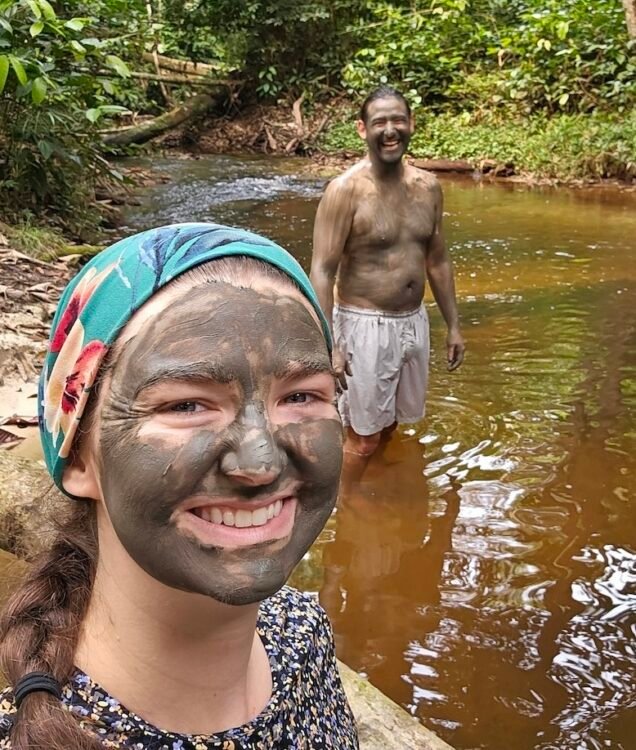
On the final morning, we did a short hike to a stream that is swimmable. Initially, I was concerned about changing into a swimsuit and biting insects, but I don’t think I got a single bite here! It was nice to relax in the water. Our guide told us the clay from the stream bed will make you look 10 years younger. Not sure about that, but it was fun.
Other Activities
In addition to what I did, there were also options to do an overnight hike and stay in the jungle, you can visit a Peruvian village, go zip-lining (additional cost), wakeboarding, and do some crafts.
As you can tell, there is a lot to do at Palmari, but I felt that our 4 nights were enough and it’s what I would recommend to others.
What are the rooms like at Palmari Nature Reserve?
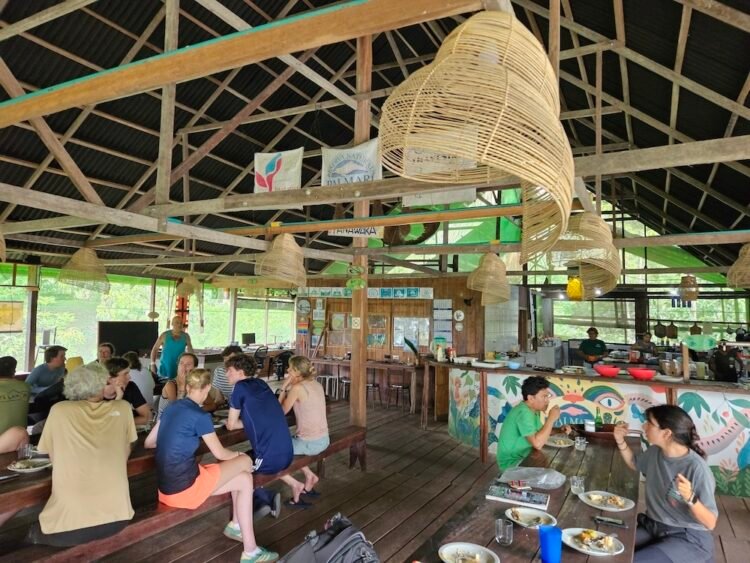
There are three types of accommodation: the Enramada, the Maloka, and the Private Lodge. The Enramada is a bit further of a walk from the visitor center/mess hall, maybe 3 minutes with a slight hill, and you sleep in a hammock. This is the most affordable option. There is a communal bathroom connected to the Enramada via a boardwalk.
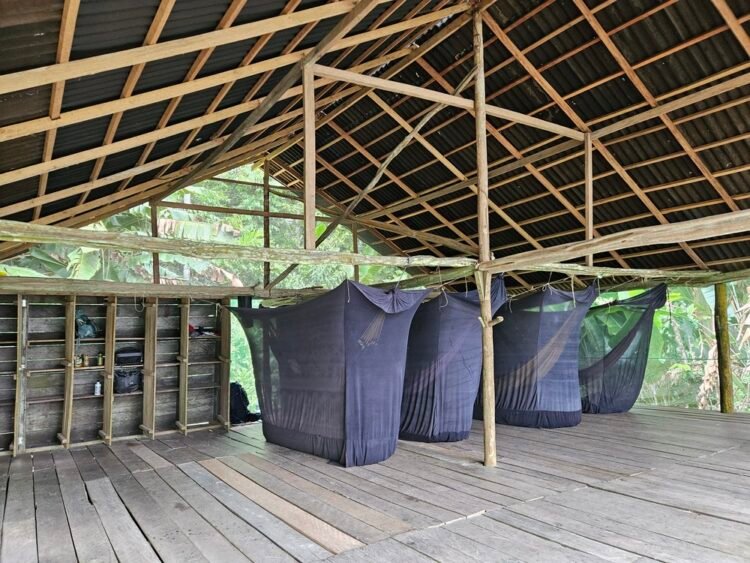
The Maloka is a bit closer, connected via boardwalk to the main part of the lodge, and you sleep on a mattress on the ground. It also has a connected communal bathroom. This is where the volunteers slept. It costs around $15 more per night than the Enramada.

The Private Lodge is the closest to a typical hotel room. It’s very central, you have your own bathroom and raised bed. It’s price is significantly higher, although it does include transportation.
Where did I stay?
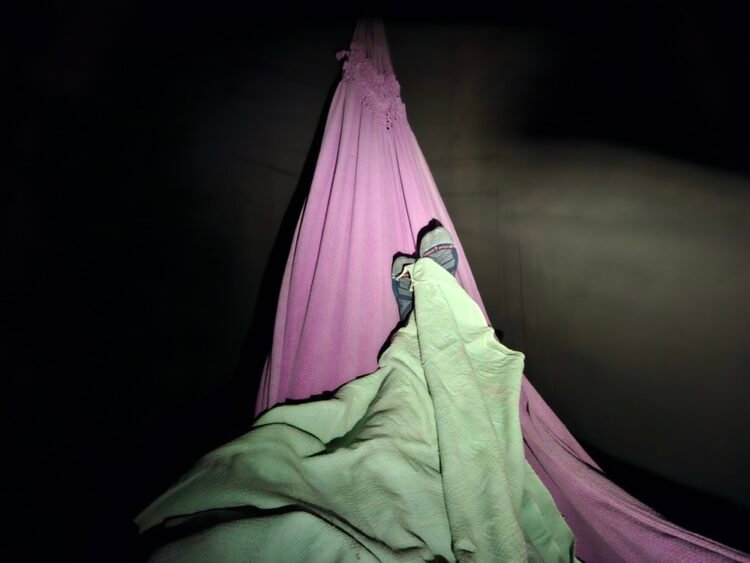
I stayed at the Enramada. I found the hammocks to be comfortable enough and slept well. Fortunately, there were no other guests during my stay other than the first night, so I didn’t have to listen to anyone snoring or getting up to go to the bathroom.
What to Pack
This was only the first leg of my trip. I also had to pack for weather in the 40s-60s (F) which is always a struggle when traveling with just a carryon. But I managed and even had some extra space.

Packing List:
Your packing list may look different! I prioritized sun and bug protection. I usually wore a short sleeve shirt with a linen long sleeve over it to help reduce bug bites. And don’t forget your binoculars!
Finally, the Birds!
About a week before I got there, I emailed Palmari letting them know I was interested in birds and requested a guide with birding knowledge or experience. Their most avid birding guide is Sebastian. He is young and has been birding for a few years. He has a lot to learn still (there were times I identified things faster or he told me a species that I knew was incorrect), but what he lacks in experience he makes up for in enthusiasm and gumption.

That being said, definitely make sure you have your own identification resources–Merlin by eBird is great for this since you don’t have to carry anything extra around and their Sound ID is very helpful in new places too.
75 Species in 5 days
Amazon Kingfisher
Amazonian Antshrike
Amazonian Trogon
Amazonian Umbrellabird
American Pygmy Kingfisher
Bare-necked Fruitcrow
Black Skimmer
Black Vulture
Black-billed Thrush
Black-collared Hawk
Blue Dacnis
Blue-and-yellow Macaw
Blue-gray Tanager
Blue-headed Parrot
Bluish-fronted Jacamar
Boat-billed Flycatcher
Buff-breasted Wren
Chestnut Woodpecker
Chestnut-bellied Seedeater
Chestnut-belted Gnateater
Cinnamon-throated Woodcreeper
Cocoi Heron
Collared Plover
Crested Oropendola
Crimson-crested Woodpecker
Dusky-headed Parakeet
Great Egret
Great Jacamar
Great Kiskadee
Green Kingfisher
Green-backed Trogon
Large-billed Tern
Lesser Kiskadee
Masked Crimson Tanager
Ochre-bellied Flycatcher
Osprey
Palm Tanager
Pavonine Quetzal
Plum-throated Cotinga
Purple-throated Fruitcrow
Red-bellied Macaw
Red-breasted Meadowlark
Red-capped Cardinal
Ringed Kingfisher
Rufous Potoo
Russet-backed Oropendola
Screaming Piha
Shiny Cowbird
Silver-beaked Tanager
Smooth-billed Ani
Solitary Sandpiper
Sooty Antbird
Southern Lapwing
Speckled Chachalaca
Spotted Puffbird
Swallow-winged Puffbird
Tropical Kingbird
Tui Parakeet
Turquoise Tanager
Varzea Schiffornis
Violaceous Jay
Wattled Jacana
White-banded Swallow
White-eyed Tody-Tyrant
White-fronted Nunbird
White-throated Toucan
White-winged Swallow
Wire-tailed Manakin
Yellow-billed Tern
Yellow-browed Sparrow
Yellow-browed Tody-Flycatcher
Yellow-headed Caracara
Yellow-hooded Blackbird
Yellow-rumped Cacique
Yellow-tufted Woodpecker
I was able to identify 75 species during my 5 days at Palamari. For the tropics, I don’t think this is very impressive. For context, I saw 74 species during a one-day excursion in the Yucatan.
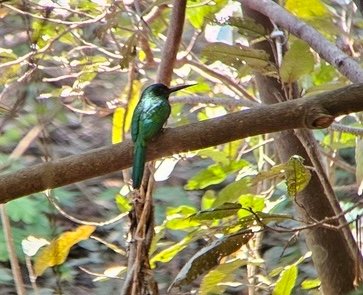
I think a lot of this comes back to the guide’s inexperience, unfortunately. My guide in the Yucatan was phenomenal and had been doing it for a long time.
You can view the full trip report here.
Was it worth it?

In all, excluding the plane ticket, my cost was $835 for two people for 4 nights, making it about $104/person/night. Everything is priced individually, so couples or groups don’t necessarily save more. However, if you’re able to match your dates to those of other travelers, you can save on the transportation cost to/from the lodge. Those prices start at $170 roundtrip but can be as low as $70 depending on the number of passengers.
Aside from costs, I do think the experience was worth it. There are a few things I wish I had known or done differently, which you can read about here.
As they say in the information sent to you ahead of time, it is important that you are flexible and have a positive attitude. It is physically and mentally difficult to be in a hot, buggy environment so make sure you are ready for that (but this goes for almost any tropical destination!).